What Does Prime-of-Prime Really Mean? A Deep Dive into Institutional Trading Infrastructure
The phrase “prime-of-prime” has become one of the most overused terms in modern trading, yet few actually understand what it means in practice. For professional trading groups and hedge-fund-style operations, this distinction isn’t marketing—it’s the line between scalable, transparent infrastructure and a model that quietly trades against you.
At Knight Markets, our goal is to demystify the prime-of-prime (PoP) concept so institutional clients know exactly how and why this structure protects their edge.
The Origin of Prime-of-Prime
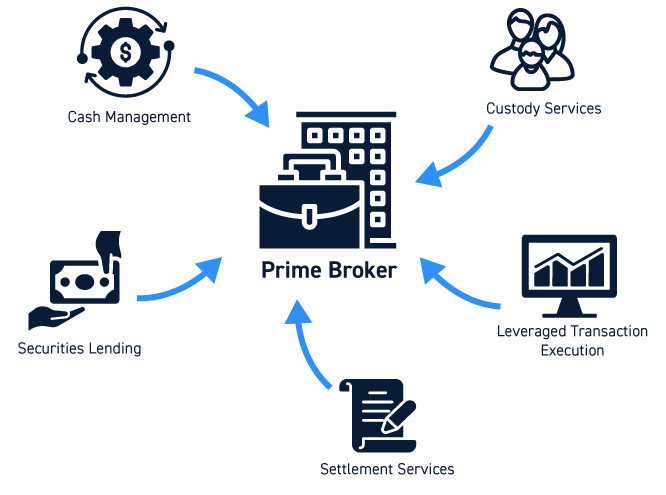
The traditional “prime broker” model was created by global banks to provide leveraged trading access and settlement to large institutions. However, as post-2008 regulation tightened, many banks began raising minimum capital requirements and restricting smaller institutional clients.
That gap—between high-bar bank primes and retail brokers—gave rise to the prime-of-prime model. PoPs act as intermediaries that maintain relationships with multiple Tier-1 liquidity providers, while offering access to smaller professional trading entities that can’t (or don’t want to) open a direct prime brokerage account with a major bank.
Essentially, a PoP “replicates” institutional-grade liquidity access for non-bank participants. The goal is simple: deliver the benefits of a true prime relationship—deep liquidity, direct market access, and transparent execution—without the institutional red tape.
The A-Book Foundation
A true prime-of-prime provider operates on a pure A-Book model—executing all client orders directly to external liquidity providers instead of taking the opposite side of trades.
This structure eliminates conflicts of interest. The provider profits from volume, not client losses. When your trades perform well, your provider performs well.
Many so-called PoPs actually operate a hybrid model—routing some trades externally, but warehousing flow internally when convenient. That’s where transparency matters most. (For a complete comparison, see our upcoming article “A-Book vs B-Book: How Broker Models Impact Your Edge”.)
Multi-Source Liquidity Access
A key benefit of a genuine PoP relationship is access to multiple liquidity streams. At Knight Markets, liquidity is sourced from more than sixty Tier-1 banks and non-bank providers—aggregated to ensure the tightest spreads and deepest market depth available.
Why does that matter? Because a single liquidity provider may quote attractive spreads in calm markets but fail during volatility. Aggregation across multiple venues ensures resilience and consistent execution quality, especially during high-volume periods.
(We’ll break this down in detail in “Deep Liquidity Access: How Tier-1 LPs Change the Game”.)
Execution Quality and Latency
Liquidity access is meaningless without reliable execution infrastructure. Professional trading groups live and die by milliseconds. The difference between a 40-millisecond and 4-millisecond fill can turn a profitable strategy into a loss.
Prime-of-prime infrastructure is built for low-latency execution—through direct market connectivity, smart order routing, and co-located servers near major liquidity hubs. When evaluating PoPs, look for empirical metrics: average fill time, rejection rate, and slippage variance.
A transparent provider will share transaction cost analysis (TCA) data and execution reports to prove that client flow isn’t being rerouted or delayed. (We explore this in “Why Execution Quality Matters: Latency, Slippage, and Fill Rates”.)
Custody and Segregation: Protecting Client Capital
Unlike retail brokers, prime-of-prime providers typically hold client funds in segregated accounts at reputable banks. This separation ensures that operational capital and client balances never co-mingle.
Segregation provides a critical protection layer. If a brokerage or PoP were to face a financial issue, segregated funds remain ring-fenced. Professional groups should always demand clear documentation on chain-of-custody protocols and reconciliation procedures.
Our forthcoming article “Custody, Segregation and Chain of Custody: Protecting Client Capital” dives deeper into the operational side of safeguarding deposits.
Technology Architecture: The Invisible Backbone
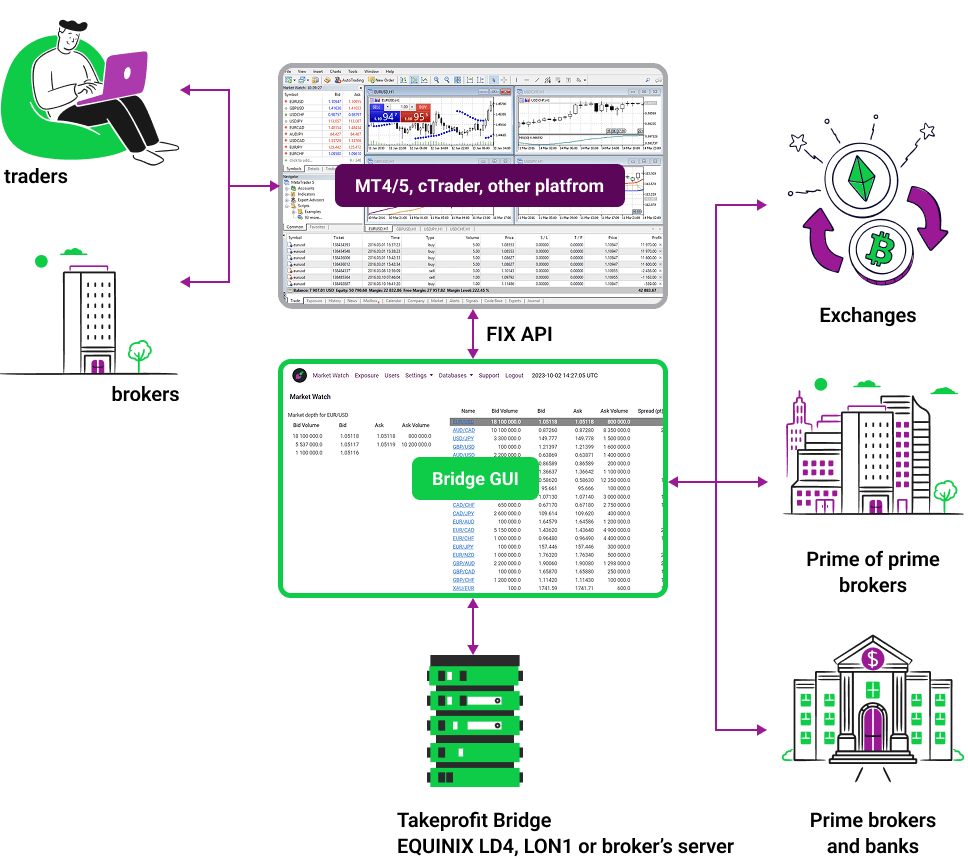
Behind every prime-of-prime solution lies a web of routing engines, aggregation layers, risk systems, and APIs. These components determine whether execution is truly neutral or subtly manipulated.
An institutional-grade PoP should offer:
- Low-latency connectivity via FIX and REST APIs.
- Smart routing logic across multiple LPs.
- Dedicated bridge technology for MT4/MT5 and proprietary platforms.
- Full audit transparency across fills, rejections, and price streams.
At Knight Markets, the core infrastructure is designed for transparency at every stage—from quote aggregation to trade confirmation—so our clients always know where and how orders are executed. (We unpack these architecture details further in “How Technology Architecture Supports Trading Edge”.)
Counterparty Risk and Trust
In the trading world, counterparty risk is a silent killer. A PoP sits between the trading group and liquidity providers; therefore, the robustness of its internal risk management systems directly impacts every client.
Professional traders should examine how their provider manages exposure:
- Does the PoP warehouse any flow internally?
- How are margin requirements calculated and monitored?
- What’s the policy for extreme market volatility?
The answers to these questions reveal whether your broker’s success is tied to your longevity—or your losses. For a detailed review of these dynamics, see “Risk Management for Trading Groups Using Prime-of-Prime Infrastructure.”
Comparing PoP to Bank Primes and Retail Brokers
It helps to visualize the trading landscape as a pyramid:
- Bank primes sit at the top, providing clearing and settlement for major institutions.
- Prime-of-primes occupy the middle layer, extending institutional access to qualified trading groups.
- Retail brokers operate at the base, catering to individuals with limited capital and standardised platforms.
Each layer serves a purpose, but the trade-off is control versus accessibility. Bank primes require high capital thresholds (often $10M+), while retail brokers provide low barriers but minimal transparency. PoPs bridge the two worlds—offering institutional-grade access with manageable requirements.
(For a comparison framework, see “How to Choose Between Prime Brokers and Prime-of-Prime Providers.”)
Who Uses Prime-of-Prime Infrastructure?
The PoP model attracts a range of professional participants:
- Proprietary trading firms seeking fast, deep execution.
- Algorithmic or quantitative groups needing robust APIs.
- Emerging hedge funds building “fund-in-a-box” structures.
- Institutional-grade brokers offering white-label access to their client base.
These are not retail traders chasing leverage—they’re disciplined operations requiring scalability, data integrity, and compliance assurance. (We’ll showcase a real-world scenario in “Case Study: How a Trading Group Scaled Using Institutional Infrastructure.”)
Compliance and Jurisdictional Considerations
Prime-of-prime providers are subject to complex international regulations and licensing. Responsible PoPs disclose which jurisdictions they serve and which they don’t.
For example, Knight Markets clearly states that services are not available to citizens or residents of certain countries (including the United States and India). Such transparency demonstrates regulatory prudence rather than limitation.
Traders must always confirm that their entity’s structure aligns with the provider’s legal coverage. Our detailed breakdown in “Regulatory and Jurisdiction Considerations When Using a Global Prime-of-Prime” explains this process.
The Economics of Volume-Based Alignment
At the heart of the PoP model is economic alignment. A true prime-of-prime earns revenue from trading volume—spreads and commissions—not client losses. This eliminates moral hazard and reinforces trust.
Retail brokers operating on a B-book model may hedge or warehouse profitable client flow to protect their margins. By contrast, a PoP has every reason to help clients scale, trade more, and succeed longer.
We explore this philosophy in “The Value of Volume-Based Pricing in Institutional Execution.”
Evaluating Transparency: How to Know You’re Getting the Real Thing
When vetting providers, request proof. Ask for detailed reports on fill ratios, execution times, and liquidity sources. If a broker hesitates to disclose these metrics, that’s a warning sign.
Reputable PoPs share aggregated execution data because they have nothing to hide. They’re confident that their technology and liquidity partners meet institutional standards.
In “How to Evaluate Execution Transparency: What Good Looks Like,” we’ll show you exactly which questions to ask before signing any agreement.
The Role of Technology in Competitive Advantage
In today’s markets, technology is not a luxury—it’s a competitive moat. A well-designed infrastructure reduces latency, prevents slippage, and integrates seamlessly with proprietary trading systems.
Modern PoPs offer modular infrastructure: FIX API for automation, MT5 bridges for discretionary trading, and data analytics for TCA. These tools empower trading groups to analyze performance and continuously refine their strategies.
For deeper insight, see “Advanced Order Types and Routing Logic: What You Should Ask For” and “Transaction Cost Analysis (TCA): Best Practices for Pro Traders.”
How Prime-of-Prime Infrastructure Scales with You
As trading volume grows, the limitations of retail platforms become obvious—order throttling, spread widening, and delayed fills. Prime-of-prime infrastructure scales linearly, allowing trading groups to increase order flow without compromising quality.
Scalability is achieved through robust connectivity, dedicated account management, and custom liquidity routing that adapts to your volume profile. This is the same infrastructure blueprint that supports institutional desks worldwide.
We detail this growth path in “Building a Scalability Plan: When Your Trading Strategy Hits Volume.”
Why Alignment of Interests Matters Most
The trading world is full of asymmetric relationships—where brokers quietly profit from client underperformance. Prime-of-prime reverses that logic. Success is mutual.
At Knight Markets, our business model is deliberately aligned with our clients. We profit only when clients trade, not when they lose. This shared-success philosophy is what sets the institutional ecosystem apart from the retail market.
For a broader look at this alignment principle, read “Why Alignment of Interests Between You and Your Broker Matters More Than Ever.”
Building Trust Through Transparency
Transparency isn’t a marketing term—it’s a measurable commitment. Every order, every fill, every report should be auditable. When traders understand the mechanics behind their execution, trust follows naturally.
Knight Markets was founded on the premise that institutional access should be earned through integrity, not obscured behind proprietary black boxes. We aim to set a new benchmark for openness in an industry often plagued by opacity.
The Future of Prime-of-Prime Models
As financial markets evolve, the PoP model will expand across new asset classes—digital assets, tokenized instruments, and hybrid derivatives. The underlying principles remain constant: transparent execution, robust liquidity, and aligned incentives.
Firms that master these foundations today will be best positioned for tomorrow’s trading landscape.
Closing Thoughts
Prime-of-prime is more than a buzzword—it’s an architecture of trust between professional traders and their liquidity providers. It merges institutional access with flexible scalability, creating a transparent ecosystem where both sides win together.
As Knight Markets continues to refine this model, our mission remains simple: to empower serious trading groups with the infrastructure they deserve.