Transaction Cost Analysis: Best Practices for Pro Traders
In professional trading, execution data tells the truth that marketing can’t. Every millisecond of latency, every pip of slippage, and every unfilled order leaves a measurable footprint. Transaction Cost Analysis—known as TCA—is the process of transforming those footprints into actionable insight. For serious trading groups, TCA is no longer optional. It’s the framework that quantifies execution quality, validates transparency, and continuously refines performance.
At Knight Markets, we consider TCA not as a reporting feature but as a discipline—a constant feedback loop between trader, technology, and liquidity provider.
What Is Transaction Cost Analysis
Transaction Cost Analysis is the systematic evaluation of trading execution against benchmarks such as market prices, timestamps, and routing data. It helps traders understand how actual fills compare to intended prices, providing empirical evidence of performance efficiency.
TCA goes beyond spread comparison. It dissects latency, routing logic, and fill quality to expose any inefficiency within the trading infrastructure. The resulting data reveals where friction exists—whether within the broker’s systems, liquidity pathways, or even the trading algorithm itself.
The best TCA systems operate in real time, feeding directly into strategy optimization and counterparty evaluation.
Why TCA Matters for Institutional Traders
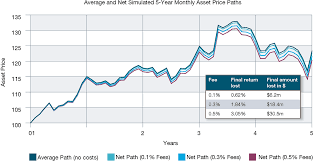
For professional traders, small inefficiencies compound rapidly. A one-pip average slippage might seem insignificant until it’s multiplied across thousands of trades per day. Over time, that friction silently erodes alpha.
TCA provides the transparency required to detect, measure, and eliminate that hidden cost. It transforms speculation into certainty by turning execution performance into quantifiable metrics.
At Knight Markets, TCA forms the backbone of our transparency commitment. Every client has access to granular execution data—timestamped, route-verified, and fully auditable.
(For context on our transparency philosophy, see “How to Evaluate Execution Transparency: What Good Looks Like.”)
The Core Components of TCA
1. Benchmark Pricing
Benchmarking compares the price at which a trade was executed to a relevant market reference, such as the midpoint of the best bid and offer at the time of order submission. The difference between these two values represents the effective transaction cost.
Knight Markets sources benchmark data from multiple Tier-1 liquidity providers to ensure accuracy and neutrality.
2. Latency Measurement
Latency is a core performance metric. TCA records the time between order submission and execution confirmation. Persistent latency patterns often reveal infrastructure inefficiencies or overloaded routing paths.
Our latency monitoring systems log every event down to the millisecond, allowing trading groups to distinguish between natural network delay and broker-induced friction.
3. Slippage Analysis
TCA quantifies both positive and negative slippage to assess how execution compares to the intended price. A transparent broker should report both, not just unfavorable outcomes.
Knight Markets shares complete slippage distributions with clients, showing how often fills occur at better or worse prices relative to request. (For more on this, refer to “Why Execution Quality Matters: Latency, Slippage, and Fill Rates.”)
4. Fill Ratio and Rejection Rate
A high fill ratio indicates reliable liquidity depth, while frequent rejections signal internal limitations or inconsistent pricing. TCA evaluates these ratios to ensure execution consistency over time and across instruments.
Knight Markets maintains high fill ratios through multi-venue aggregation, ensuring orders are routed to the most competitive source of liquidity available.
5. Routing Transparency
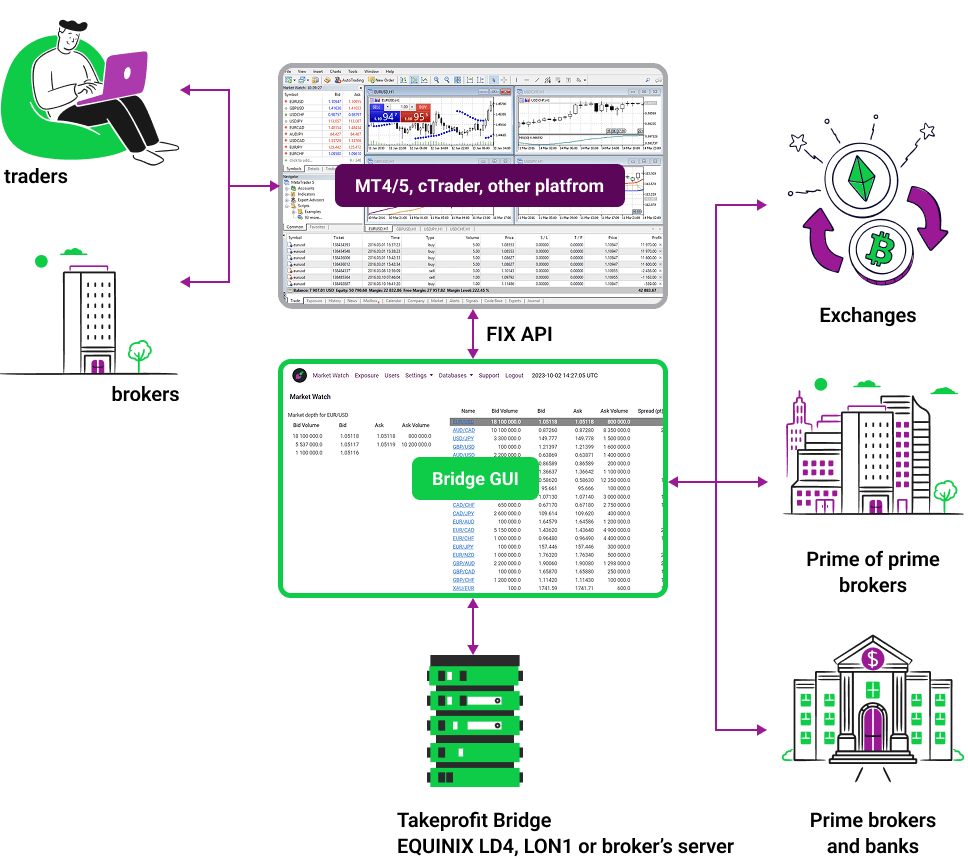
Finally, TCA evaluates routing pathways to confirm that orders are being executed externally through genuine market venues rather than internal dealing desks. This verification is critical in confirming true A-Book execution.
(For the foundational explanation of A-Book vs B-Book routing, read “A-Book vs B-Book: How Broker Models Impact Your Edge.”)
How Knight Markets Implements TCA
Our TCA system operates on three guiding principles: neutrality, granularity, and accessibility.
• Neutrality means that TCA data is objective. All reference pricing comes directly from independent liquidity providers.
• Granularity ensures that every trade is measured individually, not as part of aggregated averages that obscure detail.
• Accessibility gives clients direct visibility into their execution performance through live dashboards and downloadable reports.
Each client can review their latency trends, slippage profiles, and fill ratios in real time. This transparency empowers traders to make informed adjustments to strategy or technology configurations.
Using TCA to Refine Trading Strategies
TCA data is not just for evaluating brokers—it’s a tool for traders to refine strategy performance. By analyzing historical slippage and latency, algorithmic trading teams can identify how execution variables influence profitability.
For example:
• If negative slippage increases during specific time windows, the algorithm’s execution schedule can be adjusted.
• If latency spikes occur on particular liquidity paths, routing priorities can be recalibrated.
• If average execution price diverges from benchmark quotes, traders can renegotiate spreads or commission structures.
TCA transforms the trading process from reactive to proactive.
TCA as a Compliance Tool
In regulated environments, demonstrating best execution is not just good practice—it’s a legal requirement. Regulators increasingly expect firms to document how and why each trade achieved a given price.
TCA provides the data foundation to meet this standard. By maintaining verifiable audit trails, Knight Markets helps institutional clients comply with global execution transparency regulations.
(For more on the regulatory implications of best execution, see “Regulatory and Jurisdiction Considerations When Using a Global Prime-of-Prime.”)
The Relationship Between TCA and Risk Management
Effective risk management depends on accurate execution data. Without TCA, trading groups cannot quantify operational risk caused by poor infrastructure or inconsistent liquidity.
By combining TCA insights with real-time margin and exposure data, traders can build a dynamic picture of portfolio-level risk. This integration aligns perfectly with Knight Markets’ broader philosophy of transparency-driven risk management.
For deeper reading, revisit “Risk Management for Trading Groups Using Prime-of-Prime Infrastructure.”
How TCA Improves Broker Accountability
In an A-Book model, both trader and broker benefit from improved execution because higher volume generates mutual success. TCA enforces that alignment by holding the broker accountable through measurable performance data.
By publishing execution metrics and sharing raw logs, Knight Markets invites verification rather than avoiding it. This openness differentiates true institutional providers from those who rely on opacity to mask inefficiencies.
Continuous Improvement Through Feedback Loops
The greatest value of TCA lies in iteration. Professional trading groups that perform regular TCA reviews can continuously tighten spreads, improve routing, and optimize execution algorithms.
Knight Markets encourages quarterly performance audits with clients, using TCA data to identify potential gains and design new strategies. Over time, this iterative process compounds into measurable performance improvements across every trading system connected to our infrastructure.
Integrating TCA into Multi-Asset Trading
As more institutional traders diversify across asset classes, applying TCA consistently becomes critical. Each market has unique characteristics—volatility, depth, and liquidity behavior—that affect execution differently.
Knight Markets standardizes TCA metrics across all asset classes, allowing clients to compare performance in FX, indices, commodities, and digital assets within the same analytical framework.
For background on unified multi-asset infrastructure, see “Multi-Asset Trading with Institutional Infrastructure: Opportunities and Challenges.”
Future of Transaction Cost Analysis
As markets evolve, TCA will move beyond simple measurement toward predictive intelligence. Machine learning and AI-driven analytics are already being applied to anticipate slippage patterns, forecast latency fluctuations, and optimize routing before inefficiencies occur.
Knight Markets is investing in this frontier—developing predictive models that will help clients proactively enhance their execution quality.
Conclusion
Transaction Cost Analysis represents the ultimate expression of transparency in trading. It quantifies trust through data and replaces assumptions with evidence.
For professional traders, TCA isn’t a report—it’s an ongoing dialogue between strategy, infrastructure, and performance. By embracing TCA as part of daily operations, Knight Markets clients gain a measurable advantage: the ability to trade smarter, faster, and with total confidence in the integrity of every execution.