Risk Management for Trading Groups Using Prime-of-Prime Infrastructure
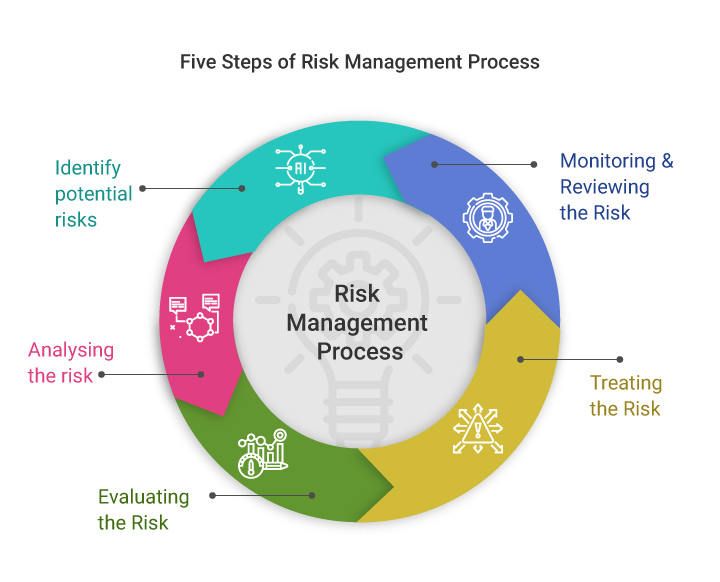
Every professional trading group, regardless of size or strategy, faces the same universal truth: risk cannot be eliminated, only managed. The difference between survival and collapse lies in how effectively that risk is understood, measured, and mitigated. Prime-of-prime infrastructure plays a crucial role in this equation, bridging liquidity access with operational control. At Knight Markets, risk management is woven into every layer of execution, custody, and transparency—ensuring that clients trade in an environment built for stability.
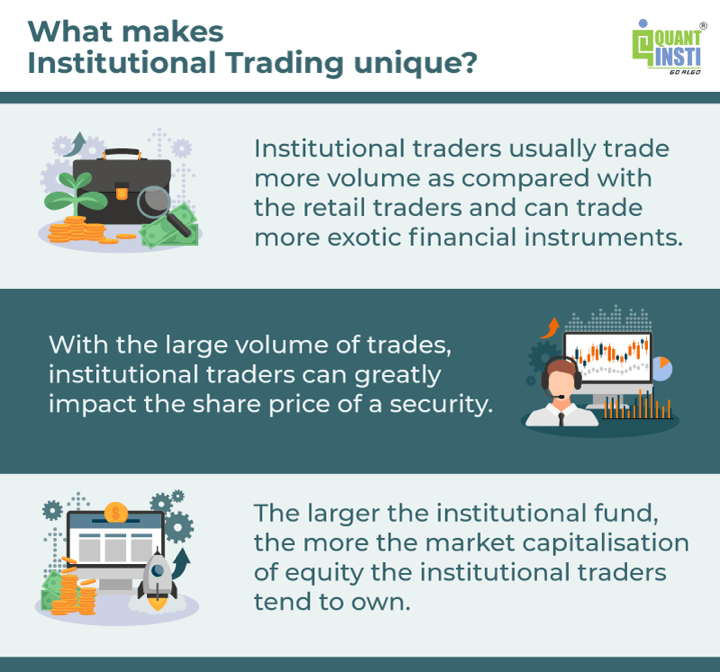
Understanding Risk in Institutional Trading
Risk in institutional trading is multi-dimensional. It extends beyond price fluctuations to include liquidity, counterparty, operational, and technology risk. Many trading failures stem not from poor market judgment but from an inadequate understanding of these structural exposures.
When traders select a prime-of-prime provider, they are not just choosing an execution partner—they are outsourcing part of their risk infrastructure. The provider’s systems, liquidity partners, and custodial framework directly affect client resilience during volatility.
(For background on how Knight Markets structures these foundations, see “Custody, Segregation and Chain of Custody: Protecting Client Capital.”)
Types of Risk Trading Groups Must Manage
Market Risk
The most visible form of risk, market risk, arises from price movement. It cannot be avoided but can be contained through leverage limits, position sizing, and disciplined portfolio diversification. Professional traders manage market risk through systematic exposure limits and dynamic hedging strategies.
Liquidity Risk
Liquidity risk occurs when a trading group cannot execute positions without significantly impacting price. This is often seen in thin markets or when brokers rely on shallow liquidity pools. Prime-of-prime providers like Knight Markets mitigate liquidity risk by aggregating order flow from more than sixty Tier-1 liquidity providers, ensuring consistent execution even during volatile periods.
(For a deeper exploration of liquidity access, review “Deep Liquidity Access: How Tier-1 LPs Change the Game.”)
Counterparty Risk
Counterparty risk stems from the potential failure or misconduct of the entities involved in your trading process. This includes liquidity providers, clearing institutions, and even the broker itself. The best defense is diversification and transparency—working only with firms that disclose their execution pathways and maintain segregated client funds.
Knight Markets mitigates counterparty exposure through a fully A-Book execution model. All trades are routed externally, and client funds are ring-fenced under strict custody protocols.
Operational Risk
Operational risk covers failures in systems, processes, or people. In trading, these failures often manifest as missed fills, pricing errors, or unanticipated outages. Knight Markets addresses operational risk through redundant infrastructure, real-time monitoring, and dual-layer authorization for fund movements.
Technology Risk
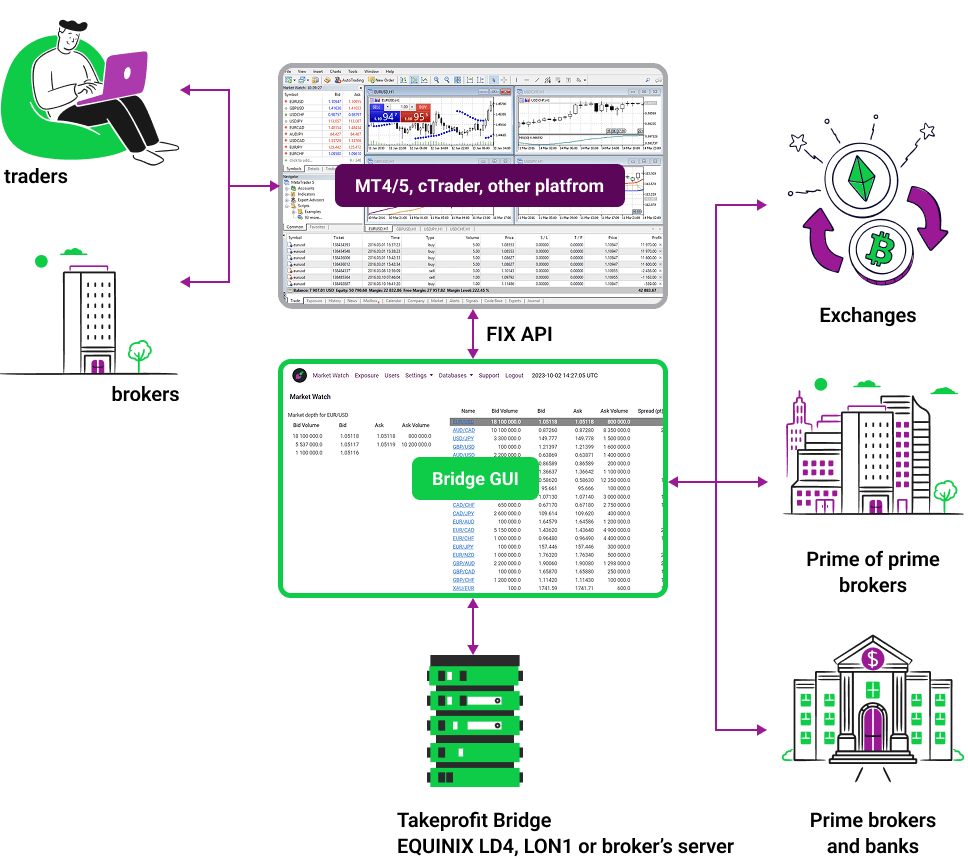
Technology is both the enabler and the threat. Latency, connectivity interruptions, and software misconfigurations can create financial and reputational damage. Knight Markets reduces technology risk through co-located data centers, FIX connectivity, and proactive latency testing that ensures consistent order transmission across all venues.
(Additional technical discussion can be found in “How Technology Architecture Supports Trading Edge.”)
Compliance and Jurisdictional Risk
Operating across multiple jurisdictions introduces regulatory complexity. A prime-of-prime must maintain compliance with anti-money-laundering rules, reporting obligations, and client-eligibility restrictions. Knight Markets discloses its jurisdictional parameters clearly to ensure clients operate within approved territories.
For more on this topic, see “Regulatory and Jurisdiction Considerations When Using a Global Prime-of-Prime.”
The Role of Infrastructure in Risk Management
A trading group’s first line of defense is the quality of its infrastructure. Prime-of-prime architecture consolidates liquidity, risk management, and execution oversight under one cohesive system.
At Knight Markets, infrastructure is not static—it evolves with client volume, market conditions, and technological advances. Each trade passes through a structured chain of custody, ensuring that every order is tracked, reconciled, and risk-assessed in real time.
Transparency and infrastructure together create the foundation for sustainable performance. Traders who operate without visibility into these systems are effectively managing risk blindfolded.
(For specific guidance on visibility standards, read “How to Evaluate Execution Transparency: What Good Looks Like.”)
How Segregation and Custody Reduce Risk
Segregated accounts eliminate the risk of co-mingling, ensuring that client funds remain isolated from corporate liabilities. In moments of systemic stress, such as market shocks or provider insolvency, segregation enables rapid identification and retrieval of client assets.
Knight Markets’ dual-layer custody framework—segregated accounts and continuous reconciliation—creates a fail-safe structure for capital protection. Each client retains full ownership of funds held in institutional banking accounts, reducing dependency on any single counterparty.
Managing Leverage Responsibly
Leverage is a tool that magnifies both opportunity and exposure. In a prime-of-prime environment, leverage parameters are designed to balance performance with capital preservation.
Knight Markets sets conservative leverage limits relative to liquidity depth and market conditions. Our margin monitoring systems provide real-time alerts for approaching thresholds, allowing clients to adjust exposure proactively rather than reactively.
Professional traders recognize that sustainable leverage is not about maximizing return—it’s about preserving longevity.
The Relationship Between Execution and Risk
Execution quality and risk management are inseparable. Slippage, re-quotes, and delayed fills all introduce implicit risk. Each millisecond of latency and each unfilled order represents a potential deviation from a trading model’s expected return.
By maintaining low-latency routing and verifiable fill integrity, Knight Markets minimizes execution risk at scale. For a detailed discussion on this, revisit “Why Execution Quality Matters: Latency, Slippage, and Fill Rates.”
Credit and Margin Control
Credit exposure management is another core component of institutional risk strategy. Knight Markets continuously monitors margin utilization across all client accounts and liquidity providers. Automated systems trigger margin calls and liquidation safeguards when necessary to prevent systemic losses.
Unlike brokers that warehouse client flow, our A-Book model ensures that margin exposure aligns with genuine market positions, not internal offsetting.
Volatility Management
Volatility is both a source of profit and a test of infrastructure resilience. During extreme market conditions, liquidity fragmentation can widen spreads or cause price dislocations.
Knight Markets maintains adaptive routing systems that dynamically adjust order flow based on real-time liquidity depth. This ensures continuity of execution even when markets move sharply.
Our approach is proactive rather than reactive—systems are tested under simulated volatility stress to verify stability before real-world turbulence occurs.
Monitoring and Reporting
Risk management depends on measurement. Trading groups need continuous feedback through real-time reporting dashboards, latency metrics, and margin analytics.
Knight Markets provides live reporting interfaces where clients can monitor balance exposure, order latency, and fill statistics directly. This level of visibility transforms risk management from a back-office task into an operational discipline.
Collaboration Between Broker and Trading Group
Risk management is most effective when broker and client operate as partners. Open communication about strategy design, exposure limits, and liquidity requirements allows Knight Markets to tailor infrastructure precisely to each trading group’s needs.
We approach client relationships as joint risk ecosystems. When clients grow sustainably, the entire platform benefits. This is the economic alignment that underpins Knight Markets’ A-Book model.
(For context on how economic alignment shapes trust, refer to “A-Book vs B-Book: How Broker Models Impact Your Edge.”)
Business Continuity and Disaster Recovery
Institutional resilience extends beyond market operations. Knight Markets maintains a multi-site disaster recovery plan, redundant data systems, and rapid infrastructure failover capabilities. These measures ensure uninterrupted service even during hardware failures or regional outages.
By investing heavily in continuity planning, we protect client operations from the rare but devastating risks of downtime.
The Strategic Importance of Risk Audits
Periodic risk audits allow trading groups to identify vulnerabilities before they become losses. Knight Markets conducts regular internal stress tests across all infrastructure components, including liquidity routing, latency paths, and reconciliation accuracy.
Clients are encouraged to review these audit summaries and conduct joint evaluations, reinforcing transparency across the partnership.
Conclusion
Risk management is not a defensive mechanism—it is an operating philosophy. Prime-of-prime infrastructure gives professional trading groups the tools to manage risk with precision, transparency, and control.
At Knight Markets, every technological decision, liquidity partnership, and custody arrangement is guided by a single question: does this reduce client risk? When the answer is yes, we build upon it; when it’s no, we redesign it.
For serious trading groups, this approach creates the only environment where capital, compliance, and performance can coexist in harmony.