Deep Liquidity Access: How Tier-1 LPs Change the Game
Liquidity is the bloodstream of every trading system. Without depth, there is no stability, and without stability, there is no consistent performance. For professional traders and institutional groups, liquidity is not just about spreads—it is about resilience, continuity, and the ability to execute large volumes without disruption. Knight Markets exists to make that level of access possible through true Tier-1 aggregation and transparent routing.
Deep liquidity access is more than connecting to a few banks; it is the science of balancing price competition, execution quality, and routing precision across multiple counterparties. The result is tighter spreads, lower slippage, and market stability even in volatile conditions.
What Is Tier-1 Liquidity
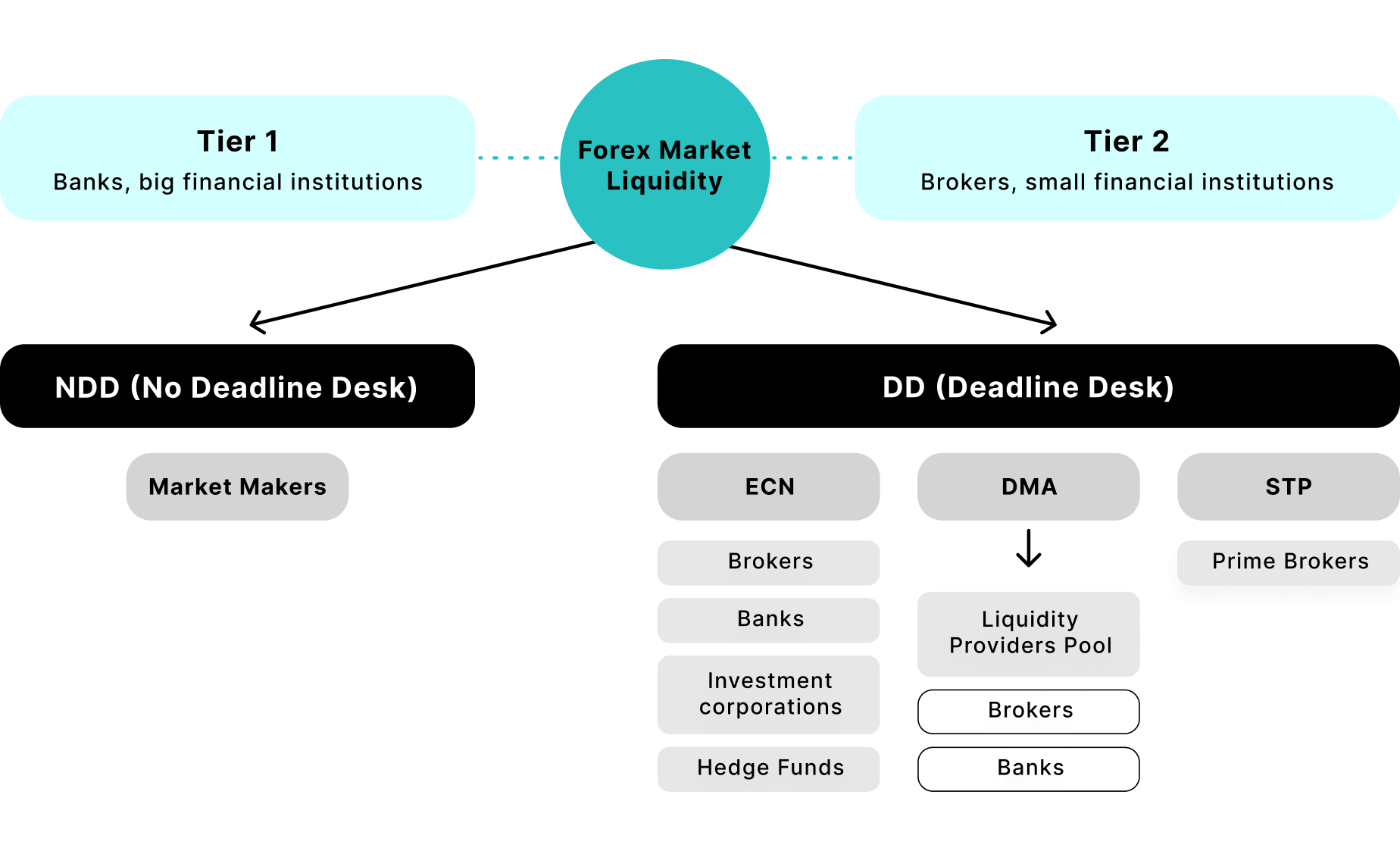
Tier-1 liquidity providers are the largest global banks and non-bank institutions that make markets in foreign exchange, commodities, and indices. They provide executable pricing to institutional venues and prime brokers, forming the backbone of market depth worldwide.
These institutions quote billions in notional volume daily, ensuring that large orders can be absorbed without significant price movement. Examples include global banking groups, hedge-fund-based liquidity makers, and specialized electronic market-making firms.
When a prime-of-prime like Knight Markets aggregates liquidity from dozens of these Tier-1 sources, it creates an execution environment with greater depth, tighter pricing, and far less exposure to single-provider failures.
Why Depth Matters
Liquidity depth determines how much volume can be executed before slippage occurs. In shallow environments, even moderate orders can move price. Deep liquidity ensures that trades of any size can be filled efficiently with minimal deviation from the quoted rate.
Depth also improves price stability. During high-volatility events—such as central-bank announcements or macroeconomic releases—liquidity often thins as smaller brokers retreat. Tier-1 aggregation cushions that volatility, allowing professional traders to maintain continuity when others face disruption.
(For a discussion on how slippage and fill rates connect to profitability, revisit “Why Execution Quality Matters: Latency, Slippage, and Fill Rates.”)
How Knight Markets Builds Deep Liquidity
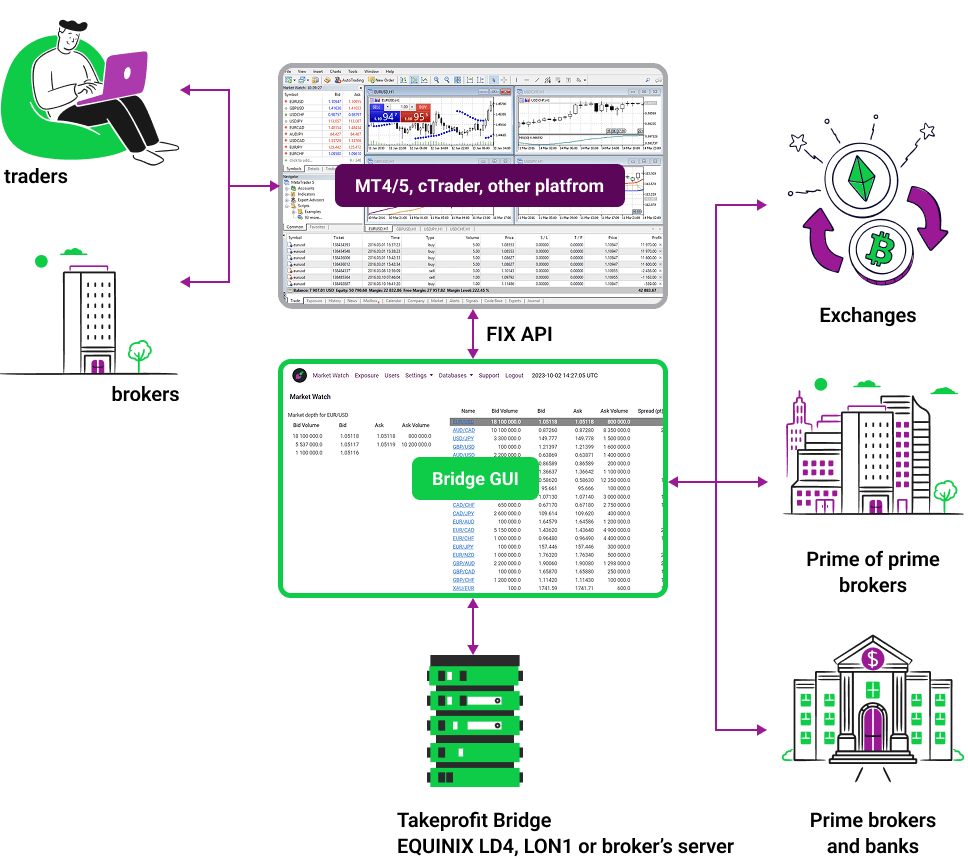
Knight Markets aggregates quotes from more than sixty Tier-1 liquidity providers, including major global banks and top-tier non-bank institutions. This network is connected through high-speed data centers strategically located near major trading hubs to minimize latency.
Our proprietary aggregation engine continuously analyzes quote depth, response time, and pricing consistency across providers. Orders are dynamically routed to the venue offering the best executable price at that exact millisecond.
This structure ensures:
• Competitive spreads without synthetic manipulation.
• Minimal slippage during volatile conditions.
• High fill ratios across all trade sizes.
• Continuous liquidity redundancy—if one provider reduces exposure, others fill the gap.
(For background on how routing integrity supports transparency, read “How to Evaluate Execution Transparency: What Good Looks Like.”)
Tier-1 vs Retail Liquidity
The difference between Tier-1 and retail-level liquidity is magnitude and reliability. Retail brokers often access liquidity through intermediaries who themselves rely on a handful of Tier-2 sources. This multi-layered structure increases latency and widens spreads.
Institutional prime-of-prime providers like Knight Markets eliminate those middle layers, giving clients direct access to primary market makers. The outcome is faster execution, consistent pricing, and reduced counterparty risk.
Aggregation and Smart Order Routing
Aggregation alone is not enough; the quality of order routing determines how that liquidity is used. Smart order routing evaluates available quotes in real time and distributes order flow to minimize market impact.
Knight Markets’ routing algorithms analyze depth of book and historical performance metrics to select the optimal path for each order. Orders can be split across venues when necessary to achieve the best blended price.
This continuous optimization process converts raw liquidity into measurable execution advantage.
(For further insight into routing architecture, see “How Technology Architecture Supports Trading Edge.”)
Liquidity and Market Resilience
During extreme market stress, liquidity can evaporate as providers withdraw quotes. The key to institutional resilience lies in redundancy—maintaining enough counterparties to absorb temporary losses of depth.
Knight Markets’ multi-provider model ensures uninterrupted pricing streams even when individual LPs pause execution. Our systems automatically rebalance routing priorities to maintain order stability.
For trading groups operating high-frequency or high-volume strategies, this resilience is critical. It means execution reliability does not disappear when volatility surges.
The Link Between Liquidity and Risk Management
Liquidity access is a form of risk management. Shallow or inconsistent liquidity exposes traders to re-quotes, rejected orders, and forced slippage—all of which translate to measurable losses.
By maintaining deep connectivity, Knight Markets helps clients reduce operational and execution risk simultaneously. This approach complements our broader strategy of transparency and segregated custody.
For a broader overview of how these components work together, review “Risk Management for Trading Groups Using Prime-of-Prime Infrastructure.”
Measuring Liquidity Performance
Institutional traders evaluate liquidity providers using empirical data. The key metrics include:
• Average spread across time intervals.
• Fill ratio and rejection percentage.
• Quote response time.
• Positive versus negative slippage ratios.
• Depth of book per symbol.
Knight Markets provides clients with access to these metrics through real-time dashboards and Transaction Cost Analysis reports. This transparency allows trading groups to verify that liquidity performance aligns with expectations.
(For a guide to interpreting this data, refer to “Transaction Cost Analysis: Best Practices for Pro Traders.”)
Liquidity Fragmentation and How to Overcome It
The modern market is highly fragmented, with liquidity scattered across banks, ECNs, and non-bank venues. Fragmentation can create pricing inconsistency and latency drift.
Knight Markets mitigates fragmentation through smart aggregation and cross-venue consolidation. Our infrastructure merges diverse liquidity sources into a single, stable execution stream, presenting clients with one unified order book instead of multiple partial markets.
This approach delivers the depth of multiple venues without the operational complexity.
Non-Bank Liquidity Providers
In recent years, non-bank market makers have become critical components of institutional liquidity. These entities often specialize in electronic trading and maintain tighter spreads during off-peak hours when banks reduce activity.
Knight Markets integrates both bank and non-bank liquidity to ensure constant market coverage. This diversification balances traditional stability with electronic speed, maximizing fill opportunities for every strategy type.
The Economics of Liquidity Aggregation
Tier-1 aggregation benefits both clients and the provider. When liquidity depth increases, spreads tighten, fill ratios improve, and trading volume grows. Because Knight Markets operates on an A-Book model, this higher volume directly benefits clients rather than creating conflict of interest.
Our profit comes from execution efficiency, not client loss—a structure that reinforces trust through mutual success.
(For more on this alignment, revisit “A-Book vs B-Book: How Broker Models Impact Your Edge.”)
Future of Institutional Liquidity
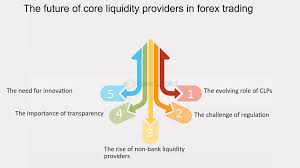
As digital assets and tokenized products mature, the concept of liquidity will expand beyond traditional FX and CFD markets. Future infrastructure must aggregate not only banks and ECNs but also blockchain-based venues and decentralized liquidity sources.
Knight Markets is already developing cross-market connectivity that integrates these new liquidity forms into our existing Tier-1 framework. The goal is to maintain institutional execution standards across both traditional and emerging asset classes.
For further reading on this evolution, see “Digital Assets and Prime-of-Prime Models: What’s Next for Crypto/FX Hybrids.”
Conclusion
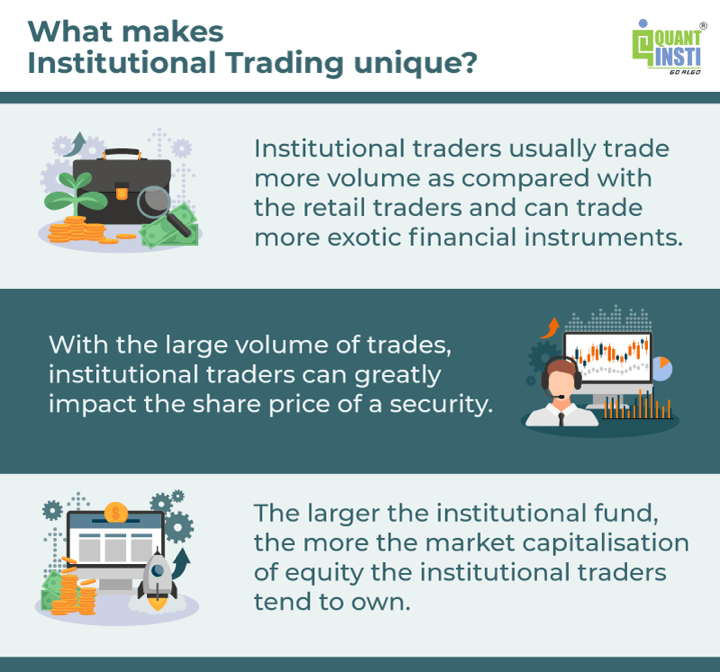
Deep liquidity access is the cornerstone of institutional trading performance. It provides the stability, precision, and flexibility that professional traders require to execute complex strategies at scale.
Knight Markets’ approach to liquidity aggregation is simple but powerful: connect to the world’s best counterparties, maintain total transparency, and continuously optimize for speed and fairness.
In an industry where depth defines durability, Tier-1 connectivity is not a luxury—it is the standard.