A-Book vs B-Book: How Broker Models Impact Your Edge
Among institutional and high-volume traders, few topics spark as much confusion as the difference between A-Book and B-Book brokerage models. Understanding this distinction is essential to preserving your edge, safeguarding capital, and ensuring your provider’s incentives are aligned with yours. Knight Markets was founded on the belief that execution should be transparent and conflict-free. To understand why that matters, you need to know exactly how these two models operate.
What Is the A-Book Model
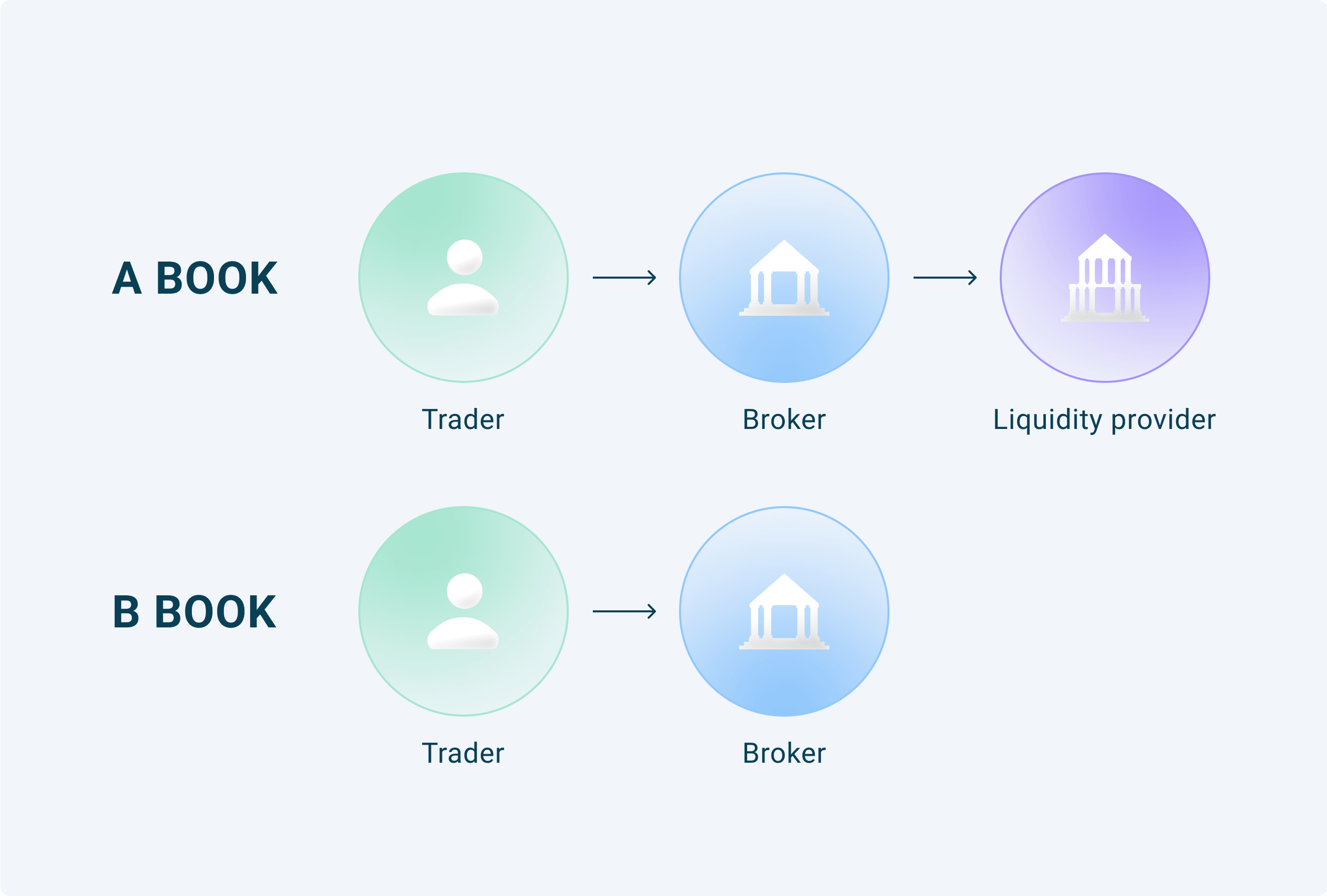
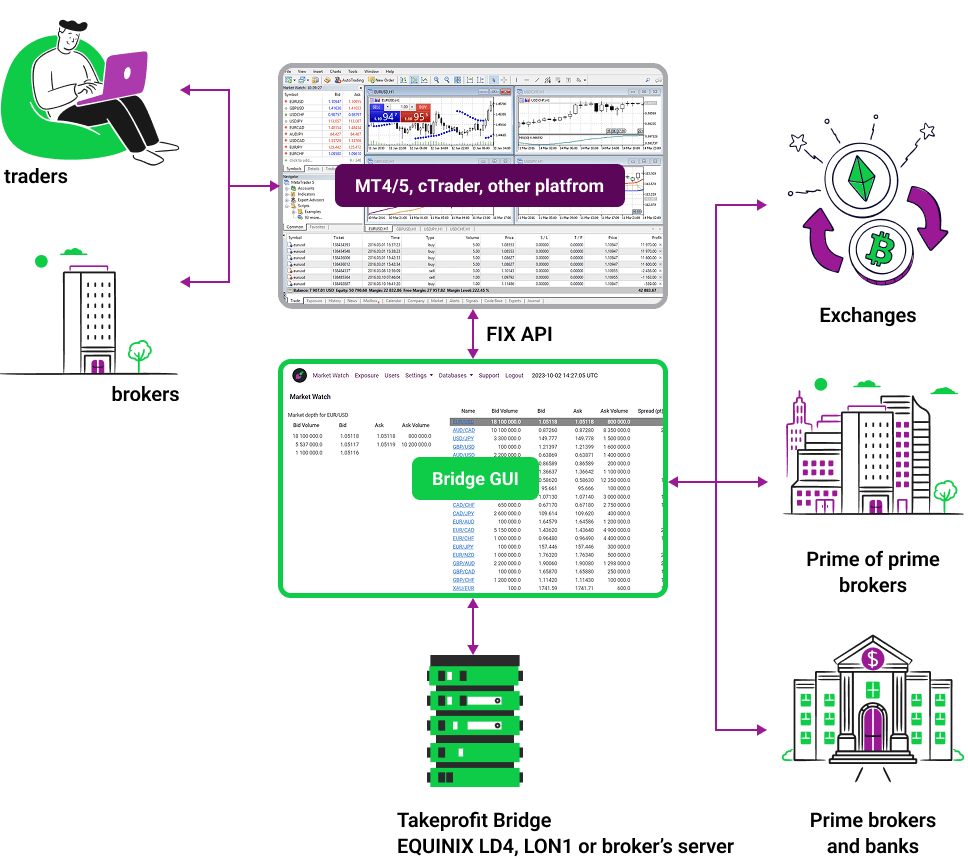
The A-Book model is the foundation of legitimate institutional execution. In this structure, the broker or prime-of-prime routes all client trades directly to external liquidity providers—typically banks, ECNs, or non-bank market makers. The broker earns a commission or markup on volume rather than taking an opposing position.
This structure ensures the broker’s profits depend on client trading activity, not client losses. When you trade more, they earn more. That alignment of interests drives transparency and trust.
Knight Markets operates exclusively on an A-Book basis, providing direct access to more than sixty Tier-1 liquidity providers aggregated into a single, efficient execution pool. The result is deep liquidity, stable pricing, and no internal dealing desk intervention.
How the B-Book Model Works
In contrast, the B-Book model represents the other end of the spectrum. Under this structure, the broker internalizes your trades—it becomes the counterparty. Instead of routing your order to the open market, the broker keeps it “in-house” and takes the opposite side.
If you lose money, the broker profits. If you win, the broker loses. That dynamic creates a structural conflict of interest. While it allows brokers to advertise tight spreads and zero commissions, it does so at the expense of execution integrity.
Many hybrid brokers use a blend of both models: routing certain orders to external venues while warehousing others internally when it benefits them. The result is inconsistent performance that often deteriorates as soon as a trader becomes profitable.
Impact on Execution Quality
Execution quality is where the difference between A-Book and B-Book truly becomes measurable. In an A-Book environment, orders are matched against real market liquidity, producing transparent slippage and competitive fills. In a B-Book setup, the broker controls price streams and fill logic, often introducing artificial latency or spread widening to tilt the odds in their favor.
Professional trading groups thrive on low latency and predictable execution. Any delay, re-quote, or hidden markup erodes alpha. A-Book routing preserves the integrity of each fill because every trade passes through to genuine liquidity providers who compete for execution priority.
(For deeper insight into how latency and fill rates shape profitability, see “Why Execution Quality Matters: Latency, Slippage, and Fill Rates.”)
Why Retail Brokers Favor the B-Book Model
Retail brokers often choose the B-Book approach for one simple reason: it’s more profitable for them. Most retail traders lose money over time. By taking the opposite side of those trades, the broker essentially converts client losses into firm profits.
This model also reduces the broker’s need to maintain costly prime-of-prime relationships or bank credit lines, allowing them to focus on marketing instead of infrastructure. Unfortunately, this cost savings comes directly at the expense of fairness and transparency.
For institutional or algorithmic traders, this model is unacceptable. Performance-driven strategies require access to real market liquidity, verifiable reporting, and neutral execution.
Transparency and Reporting Standards
A genuine A-Book provider welcomes transparency because there’s nothing to hide. Execution data—fill speed, slippage variance, quote source—is fully auditable. By contrast, B-Book brokers rarely share this information because it would reveal internal dealing practices and execution asymmetry.
When evaluating providers, request transaction cost analysis (TCA) reports, aggregated liquidity source lists, and execution quality metrics. A transparent prime-of-prime like Knight Markets provides these openly. (For detailed guidance, see “How to Evaluate Execution Transparency: What Good Looks Like.”)
Risk Management Differences
Risk management in an A-Book environment focuses on credit and operational risk. The provider monitors client exposure relative to external liquidity partners but doesn’t assume market risk. In a B-Book, the broker must constantly manage internal exposure against its own clients, often hedging selectively.
This can create a vicious cycle where the broker hedges profitable clients selectively while leaving losing clients unhedged. The net effect: profitable traders face execution friction, while the broker quietly profits from the rest.
(We’ll discuss how trading groups can protect themselves in “Risk Management for Trading Groups Using Prime-of-Prime Infrastructure.”)
Pricing and Liquidity Access
One of the key differences between the two models lies in how spreads are derived. A-Book brokers aggregate real quotes from multiple Tier-1 liquidity providers, ensuring competition among them. B-Book brokers, by contrast, generate internal synthetic prices that can be adjusted to manage profitability.
In practice, that means a trader might see tighter displayed spreads under a B-Book but pay a higher effective cost through slippage or re-quotes. Institutional traders value true market depth over optical tightness.
The Knight Markets model ensures clients access raw pricing directly from deep liquidity sources with minimal markup and no internal manipulation. (Learn more in “Deep Liquidity Access: How Tier-1 LPs Change the Game.”)
Operational Alignment and Incentives
In an A-Book environment, both client and broker benefit from long-term success. The broker’s focus is to help traders grow volume sustainably. In a B-Book, the broker’s short-term interest often conflicts with client performance.
This is why the philosophical foundation of Knight Markets is alignment through volume-based economics. We profit only when clients trade successfully and consistently. That alignment creates an ecosystem of trust that cannot exist under a B-Book framework.
Segregation of Funds
Another critical factor is how client funds are held. A-Book prime-of-prime providers maintain segregated accounts at reputable banks, separating client assets from operational funds. B-Book brokers may pool or co-mingle client deposits within the firm’s operational capital.
Segregation ensures client assets remain secure even if a broker experiences operational distress. Professional groups should demand full documentation on fund custody and reconciliation. We explore this in depth in “Custody, Segregation and Chain of Custody: Protecting Client Capital.”
Regulatory Implications
Regulators around the world are tightening scrutiny on opaque dealing desk models. Many jurisdictions now require disclosure of execution methodology and conflicts of interest. Traders operating under professional mandates have a fiduciary obligation to ensure counterparties meet these transparency standards.
Partnering with an A-Book, conflict-free provider helps satisfy these requirements and protect your firm’s reputation. (More in “Regulatory and Jurisdiction Considerations When Using a Global Prime-of-Prime.”)
How to Identify Which Model Your Broker Uses
Determining whether your broker operates on an A-Book or B-Book model requires observation and documentation. Start with the following questions:
• Are your trades executed externally or internally?
• Does the broker provide details of liquidity providers?
• Can you access fill reports and TCA data?
• Is the broker profitable when clients win, or when they lose?
• How are funds held and reconciled?
A reputable provider will answer these questions clearly. Ambiguity is a red flag.
Why Hybrid Models Are Risky
Some brokers advertise “hybrid execution” as the best of both worlds. In reality, it’s a selective mechanism to route winning traders to external markets and keep the rest internal. This segmentation introduces unpredictable performance, inconsistent slippage, and potential for discretionary intervention.
In professional trading, predictability is everything. Hybrid models undermine that certainty.
Economic Efficiency and Cost Transparency
A-Book brokers may charge explicit commissions or markups, but these costs are transparent and consistent. B-Book brokers often hide costs in widened spreads or delayed execution. Over time, the total cost of trading under a B-Book model can far exceed the apparent savings.
Institutional traders understand that paying for transparent execution is a necessary cost of doing business. Hidden friction is always more expensive than clear pricing.
Alignment of Interests
At its core, the A-Book vs B-Book discussion isn’t just about mechanics—it’s about philosophy. The A-Book model builds long-term partnerships grounded in trust and shared success. The B-Book model relies on client churn.
At Knight Markets, every aspect of our operation reinforces alignment. Our revenue depends on client activity, not client loss. Our reputation depends on transparency, not opacity. That’s the essence of true institutional integrity.
Transitioning from Retail to Institutional Infrastructure
Many profitable retail traders eventually outgrow B-Book brokers. When they begin to experience execution degradation—delays, widening spreads, or account limitations—it’s often because their success has become costly for the broker. Transitioning to a prime-of-prime like Knight Markets eliminates that friction and restores fair access.
This progression is detailed further in “Why Quant and Algo Trading Firms Need Infrastructure Above Retail Brokers.”
The Future of Transparent Execution
As technology advances and regulation tightens, the B-Book model faces increasing pressure. Professional traders are demanding verifiable transparency and conflict-free execution. The industry is shifting toward PoP structures that align incentives and restore fairness.
Knight Markets continues to lead that movement by offering pure A-Book access backed by institutional liquidity and deep operational oversight.
Conclusion
Understanding the distinction between A-Book and B-Book brokers is one of the most important steps in safeguarding your trading strategy. In a world where milliseconds matter and transparency defines success, partnering with an A-Book prime-of-prime provider ensures you operate in an environment built for scale, trust, and performance.
For traders ready to move beyond opaque execution models, Knight Markets provides the infrastructure that professional performance demands.